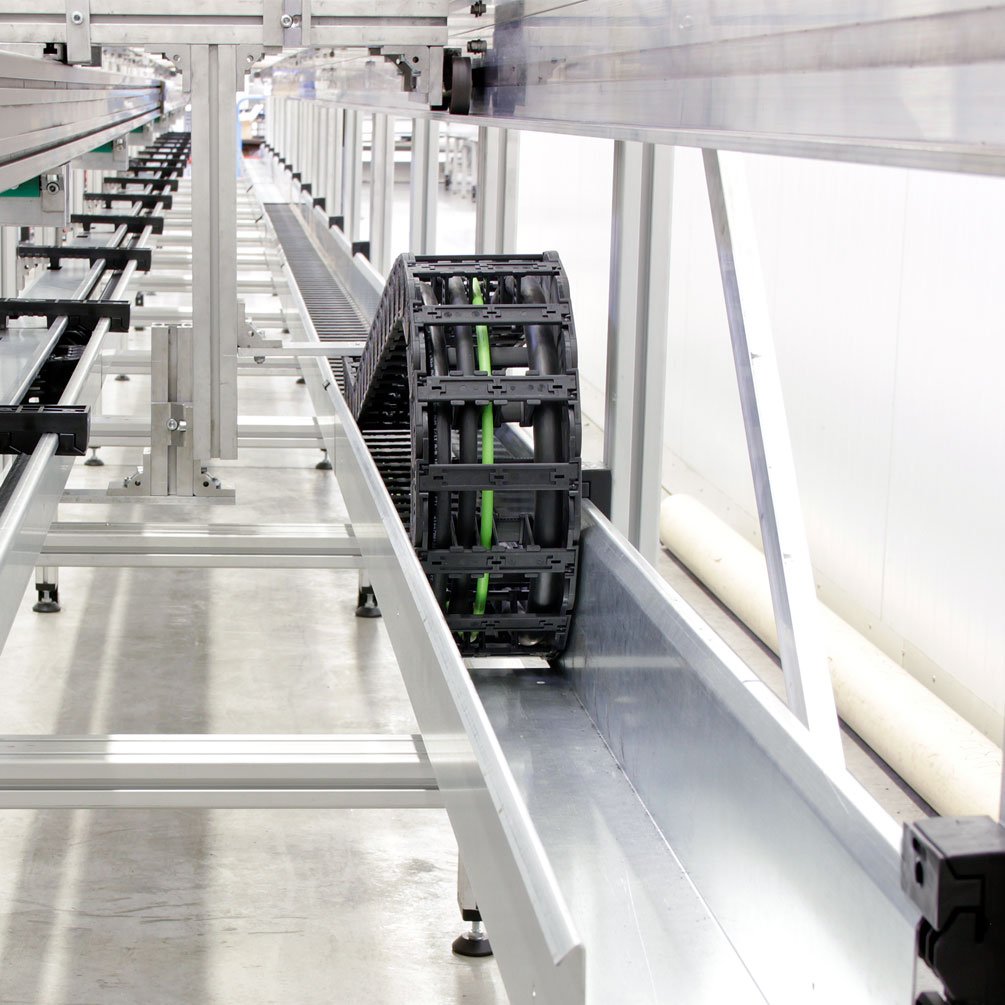
What is a cable carrier?
A cable carrier—also known as an energy chain, drag chain, or cable track—is a mechanical system designed to guide and protect moving cables and hoses in industrial machinery.
It ensures that cables move in a controlled way, preventing tangling, bending damage, and premature wear.
Cable carriers are commonly used in:
- CNC machines
- Robotics
- Automation systems
- Packaging machines
- Material handling equipment
👉 Looking for a reliable cable carrier?
Browse our webshop and find the right solution for your machine in minutes.
How does a cable carrier work?
A cable carrier consists of a series of connected links that form a flexible chain. Inside the chain, cables and hoses are neatly organized and guided along a fixed path.
When the machine moves:
- The carrier bends in a defined radius
- Cables remain protected and aligned
- Stress on cables is minimized
This controlled movement significantly extends the lifespan of your cables and reduces maintenance costs.
Why Are Cable Carriers Essential in Modern Machinery?
Without a cable carrier (energy chain), moving cables are exposed to:
- Abrasion
- Twisting and tangling
- Mechanical stress
- Environmental damage (dust, oil, debris)
Key benefits:
✔ Longer cable lifespan
✔ Reduced downtime
✔ Improved machine reliability
✔ Cleaner and safer cable management
✔ Lower maintenance costs
👉 Upgrade your machine today with high-quality cable carriers available directly in our webshop.
Types of Cable Carriers (Energy Chains)
Choosing the right type is crucial for performance and durability.
1. Plastic Cable Carriers
- Lightweight
- Cost-effective
- Corrosion-resistant
- Ideal for standard industrial applications
2. Steel Cable Carriers
- Extremely durable
- Suitable for heavy loads
- Resistant to harsh environments
- Ideal for steel mills and heavy industry
3. Open vs Closed Cable Carriers
- Open: Easy access, better ventilation
- Closed: Maximum protection against debris and dust
👉 Not sure which type you need?
Check out our full range and filter by application in our webshop.
How to Choose the Right Cable Carrier
Selecting the correct cable carrier (drag chain) is essential for optimal performance.
Consider these factors:
1. Inner dimensions
Make sure there is enough space for all cables and hoses.
2. Bend radius
Always follow the minimum bend radius of your cables.
3. Load capacity
Heavier cables require stronger carriers (often steel).
4. Travel length & speed
Long travel distances need more robust systems.
5. Environment
Consider exposure to:
- Dust
- Chemicals
- High temperatures
👉 Use our webshop filters to quickly find the perfect cable carrier for your application.
Frequently Asked Questions (FAQ)
What is the difference between a cable carrier and a drag chain?
There is no real difference—these terms are used interchangeably. “Energy chain” is another common synonym.
How long do cable carriers last?
With proper installation and use, cable carriers can last for years, depending on load and environment.
Can I replace a cable carrier myself?
Yes, most systems are modular and easy to install. However, correct sizing is critical.
Which cable carrier is best for CNC machines?
Typically, plastic cable carriers are sufficient, but heavy-duty CNC setups may require steel versions.
Ready to Choose the Right Cable Carrier?
The right cable carrier (energy chain or drag chain) can significantly improve your machine performance and reduce downtime.
👉 Browse our webshop now and order your cable carrier today
✔ Fast delivery
✔ Wide range of sizes and types
✔ Expert support available

Add comment