


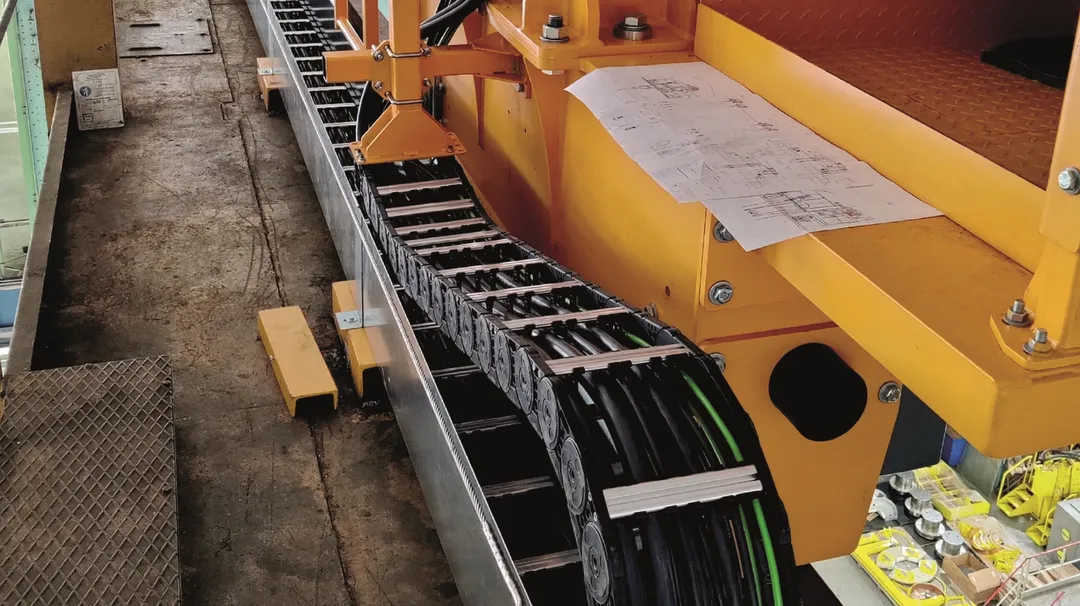
How to Choose the Right Cable Carrier (Step-by-Step Guide)
Introduction
Choosing the right cable carrier—also known as an energy chain, drag chain, or cable track—is critical for the performance and lifespan of your machinery.
Selecting the wrong size or type can lead to:
Premature cable failure
Increased downtime
Higher maintenance costs
In this guide, you’ll learn exactly how to choose the right cable carrier step by step.
👉 Looking for the right cable carrier? Browse our webshop and order directly online.
Quick Answer: How to Choose a Cable Carrier
To choose the right cable carrier, you need to consider five key factors: inner dimensions, bend radius, load, travel length, and operating environment. Proper sizing and material selection ensure longer cable life and reliable machine performance.
Step 1: Determine the Inner Dimensions
The first step is to calculate the required inner height and width of your cable carrier.
How to do it:
Measure all cables and hoses
Add spacing between them (at least 10–20%)
Avoid stacking cables tightly
👉 Tip: Always choose a slightly larger cable carrier to prevent friction and overheating.
Why this matters:
Insufficient space leads to cable wear, overheating, and reduced lifespan.
Step 2: Check the Minimum Bend Radius
Every cable has a minimum bend radius. Your cable carrier must match or exceed this.
Rule:
The carrier bend radius ≥ cable bend radius
If the bend radius is too small:
Cables get damaged internally
Signal issues may occur
Lifespan drops significantly
👉 Browse cable carriers with different bend radii in our webshop.
Step 3: Calculate Load and Weight
Heavier cables require stronger cable carriers.
Consider:
Total cable weight per meter
Additional hoses (air, hydraulic, etc.)
Dynamic movement
General guideline:
Light loads → plastic cable carriers
Heavy loads → steel cable carriers
👉 Not sure which type you need? Explore our range and compare options online.
Step 4: Determine Travel Length and Speed
The travel length (how far the carrier moves) and speed are critical.
Important factors:
Short travel → standard carrier
Long travel → reinforced system
High speed → low-friction design
If you ignore this:
Increased wear
Chain instability
System failure
Step 5: Consider the Operating Environment
Your environment has a huge impact on the type of cable carrier you need.
Ask yourself:
Is there dust or debris?
Are chemicals involved?
Is there high temperature exposure?
Is it indoor or outdoor?
Recommendations:
Dirty environment → closed cable carrier
Clean environment → open cable carrier
Harsh conditions → steel construction
👉 Find cable carriers suitable for your environment in our webshop.
Common Mistakes to Avoid
Avoid these typical errors when selecting a cable carrier:
Choosing a carrier that is too small
Ignoring bend radius requirements
Overloading the system
Not considering environment
Poor cable arrangement inside the carrier
Frequently Asked Questions (FAQ)
What size cable carrier do I need?
You need a size that fits all cables with extra space (10–20%) and meets bend radius requirements.
Can I use one cable carrier for multiple cables?
Yes, as long as they are properly separated and not overloaded.
What happens if the cable carrier is too small?
It can cause cable damage, overheating, and system failure.
Is plastic or steel better?
Plastic is suitable for most applications, while steel is better for heavy-duty environments.
Ready to Choose the Right Cable Carrier?
The right cable carrier (energy chain or drag chain) can significantly improve your machine performance and reduce downtime.
👉 Browse our webshop now and order your cable carrier today
✔ Fast delivery
✔ Wide range of sizes and types
✔ Expert support available
Conclusion
Selecting the right cable carrier doesn’t have to be complicated. By focusing on dimensions, bend radius, load, travel, and environment, you can make the right choice quickly and confidently.
Investing in the right solution now prevents costly issues later.
Ready to Choose the Right Cable Carrier?
The right cable carrier (energy chain or drag chain) can significantly improve your machine performance and reduce downtime.
👉 Browse our webshop now and order your cable carrier today
✔ Fast delivery
✔ Wide range of sizes and types
✔ Expert support available
Conclusion
Selecting the right cable carrier doesn’t have to be complicated. By focusing on dimensions, bend radius, load, travel, and environment, you can make the right choice quickly and confidently.
Investing in the right solution now prevents costly issues later.


Add comment